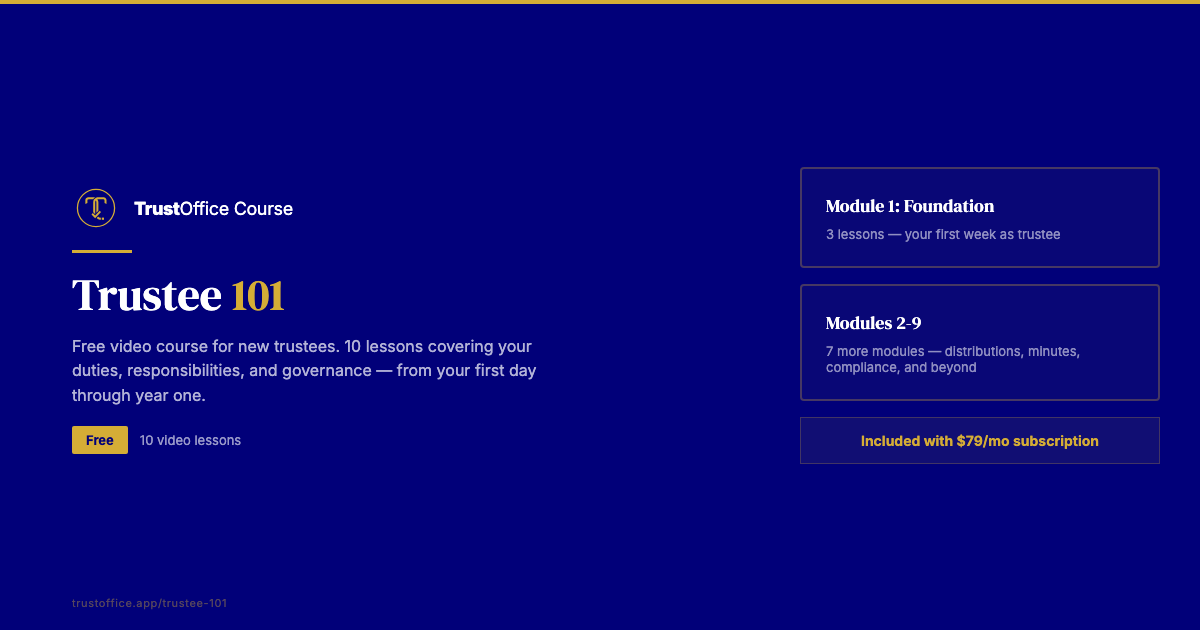
copyright for a No-Cost Trustee Course to Strengthen Your Competencies Today
Signing up for a free trustee course can powerfully develop one's occupational expertise. It furnishes core information on fiduciary responsibilities and asset management. Attendees can progress at their own pace while networking among sector veterans. This possibility not only enhances understanding but also creates opportunities for career elevation. However, many may reflect what particular skills they can expect to obtain and how these can be put to use in real-life applications.

Essential Abilities You'll Obtain From a Free Trustee Course
A free trustee course provides participants with fundamental knowledge vital for sound management and oversight. The course content generally includes key areas such as financial education, allowing trustees to comprehend budgets, financial statements, and investment approaches. Participants also acquire understanding into regulatory obligations, ensuring compliance with laws and moral principles.
In addition, the course enhances strategic thinking competencies, providing learners to help achieve long-term business targets. Effective communication talents are another key dimension, enabling trustees to communicate proposals transparently and coordinate with stakeholders efficiently.
Moreover, collaborative and managerial competencies are highlighted, fostering collaboration among board members and advancing a constructive decision-making process. Conflict resolution methods are also taught, readying participants to navigate disagreements in a professional manner.
Ultimately, these competencies not only prepare individuals for their roles as trustees but also improve their overall administrative abilities, making them precious resources to any organization.
Top Reasons to Join a Free Trustee Training for Professional Growth
Many practitioners explore methods to enhance their professional lives, and taking a free trustee course delivers unique gains that can greatly boost one's professional path. To start, these courses deliver essential insights about trustee accountabilities, improving a professional's trustworthiness in their field. Comprehending the ethical and legal obligations of a trustee can open up new career opportunities and duties.
Furthermore, connecting with industry experts and peers during these courses can produce strong connections that may support career growth. Participants also gain hands-on expertise in financial management and governance, which are in great demand in various industries. Finally, the adaptability of digital learning permits individuals to study at their own pace, making it easier to balance education with existing work obligations. Overall, enrolling in a free trustee course not only expands knowledge but can also considerably improve professional opportunities and career expansion.
Locating the Excellent Costless Trustee Certification for You
How can one identify the most fitting free trustee course among the numerous choices available? First, individuals should assess their specific needs and professional aspirations, establishing what abilities or information voids they seek check article to address. Next, researching course content and structure is crucial; a detailed curriculum plan can indicate whether the course will satisfy individual requirements.
Additionally, evaluating the qualifications of the instructors can deliver insight into the caliber of education delivered. Testimonials and reviews from past students are crucial, as they illustrate genuine experiences and results.
Finally, copyrightining the pliability of the course format—whether it is independently paced or set—can help in picking a program that accommodates one's lifestyle. By accounting for these factors, students can make a more informed decision, ensuring the picked program matches their professional aspirations and educational needs.
Proven Tips for Gaining Maximum Results from Your Trustee Course
Maximizing the benefits of a trustee course requires a thoughtful approach. Participants should begin by establishing clear goals, identifying particular skills or knowledge they wish to acquire. Engaging fully in the learning process is essential; this includes participating in discussions, asking questions, and collaborating with peers. Regularly reviewing course materials helps reinforce understanding and retention of key concepts.
Furthermore, it is helpful to take notes and create summaries of key subjects, facilitating simpler review later. Networking with peer attendees can provide useful perspectives and assistance, fostering a community atmosphere. Leveraging additional materials, such as suggested texts or online forums, can improve comprehension and application of learned skills.
Ultimately, implementing the knowledge in real-world situations, whether through simulations or real-life situations, strengthens understanding and enhances self-assurance in trustee responsibilities. By adhering to these approaches, individuals can completely maximize their trustee course training for personal and professional growth.
Real-World Applications of Trustee Competencies in Governance
Trustee competencies are vital in effective governance, allowing individuals to navigate intricate institutional environments. These competencies are critical for fostering openness, responsibility, and principled choices within different organizations, including nonprofits, educational institutions, and corporate boards. Trustees equipped with robust analytical capabilities can evaluate organizational performance, financial health, and adherence to regulatory standards, thereby enhancing overall governance.
Moreover, strong interpersonal skills allow trustees to engage with stakeholders, guaranteeing that varied viewpoints are taken into account in decision-making processes. Dispute resolution skills are just as vital, since they help preserving harmony and collaboration among board members and other stakeholders. Additionally, long-term planning abilities allow trustees to align organizational goals with broader missions, guaranteeing longevity and growth. In this way, the application of trustee skills in governance not only strengthens institutional frameworks but also promotes trust and integrity within communities and organizations.
Commonly Posed Questions
Will Trade Groups Acknowledge Complimentary Fiduciary Courses?
Free trustee educational programs may not always be acknowledged by professional organizations. Accreditation generally relies on the program provider and the designated accrediting entity, so candidates should validate credentials before entering any course.
How long Does a Typical Free Trustee Course Take to Finish?
A standard free trustee program typically takes between four to eight weeks to complete. Course duration may differ depending on the organization, content depth, and student engagement, permitting for adaptability in learning schedules.
Can I Obtain a Certificate After Completing a Free Trustee Course?
Yes, participants can usually obtain a diploma after finishing a free fiduciary course. However, certificate options may vary by organization, so individuals should confirm the specific details with the program provider before registering.
What Limitations Apply on the Quantity of Fiduciary Classes I Can Register For?
Generally, there exists no limit on the number of trustee courses individuals may take. Learners are urged to pursue multiple courses to deepen their knowledge and skills regarding trustee duties and organizational management.
What Conditions Are Necessary for Signing Up in a Free Trustee Course?
To copyright for a free trustee course, participants typically need a essential understanding of financial principles, commitment to the program duration, and sometimes prior experience in trustee responsibilities. Specific requirements may diverge by institution.